1.1 Introductions
Welcome to Geographies of China
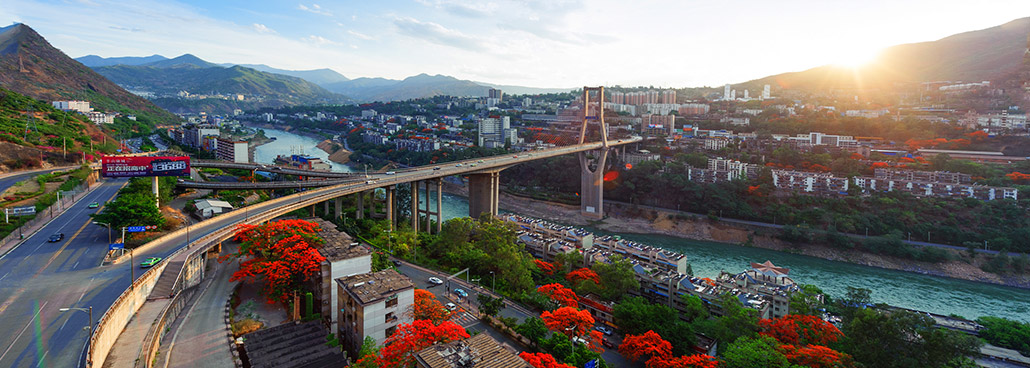
Bingcaogang Bridge, Panzhihua, Sichuan
Today
- Define “metageography” and what we mean by “geographies.”
- Review the structure and outcomes of the course.
- Review the course website, syllabus, and Google Classroom.
- Get to know each other.
Key concepts
- spatial difference
- metageography
- geographies (vs. geography)
- human geography
- environment-society relations
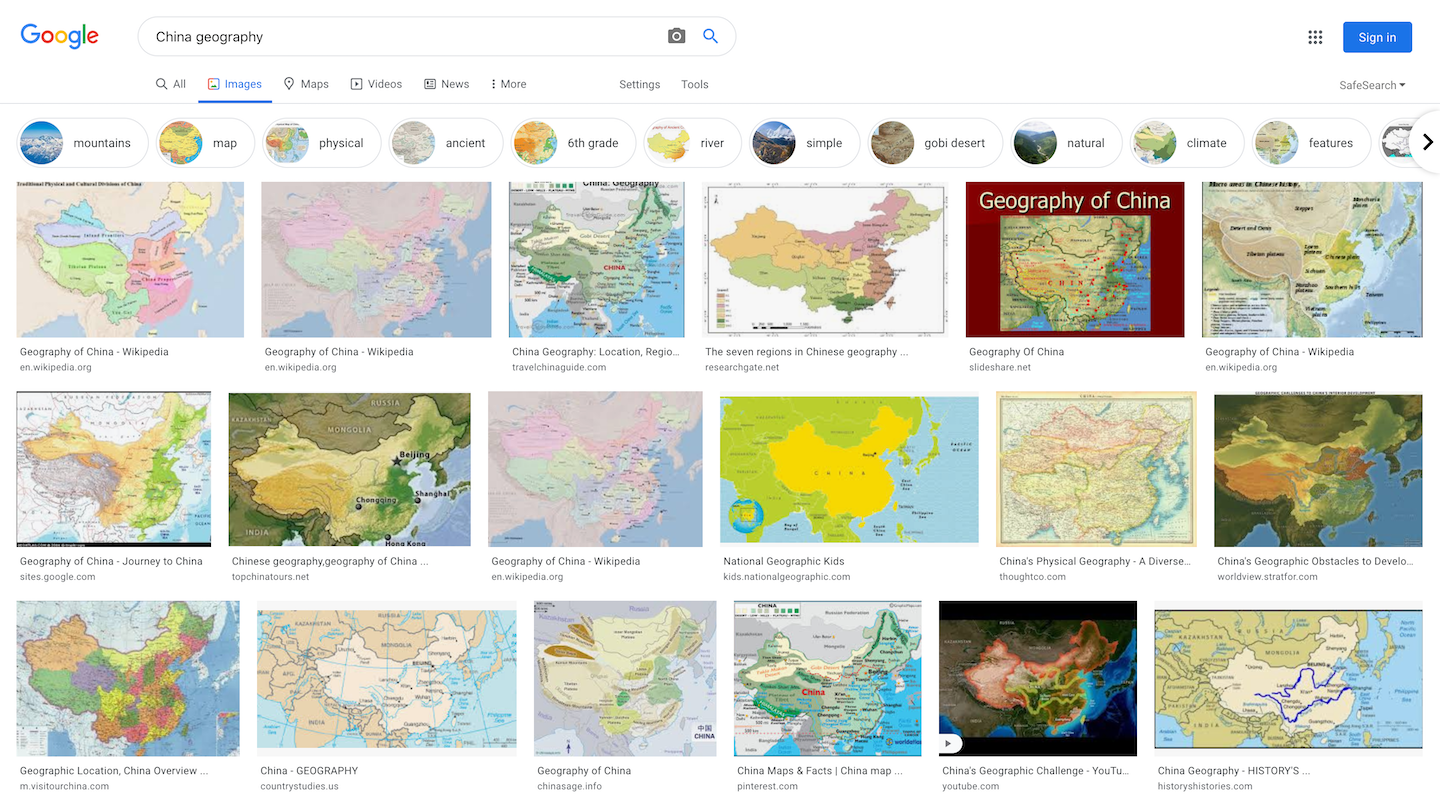
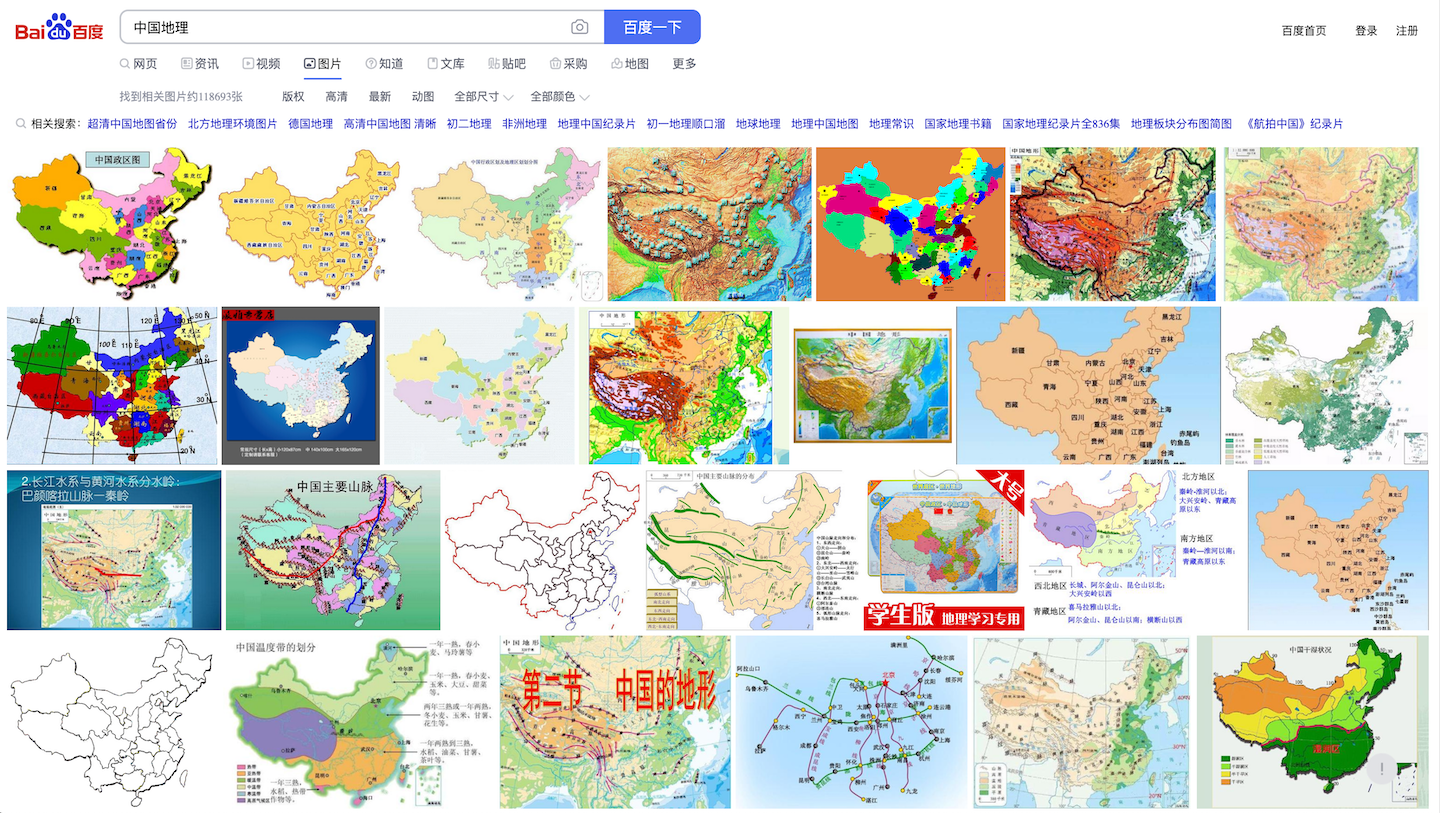
“China Geography”
Metageography
- metageography
- “The set of spatial structures through which people organize their knowledge of the world: the often unconscious frameworks that organize studies of history, sociology, anthropology, economics, political science, or even natural history…. The primary spatial structures around which we habitually conceptualize global geography” (Lewis and Wigen 1997, ix, ix n. 2).
This is a broad theoretical approach we’ll be taking in this course, examining our implicit spatial conceptions.
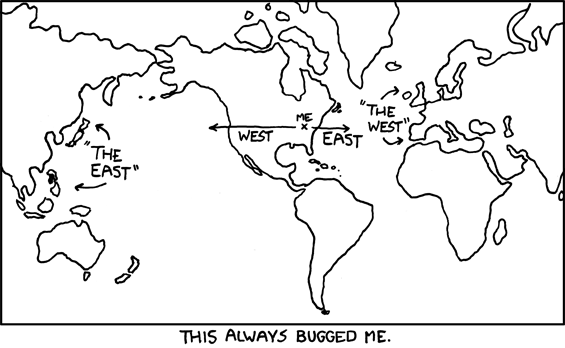
Here are a couple of examples:
For example, where is the “Orient” or “East”?
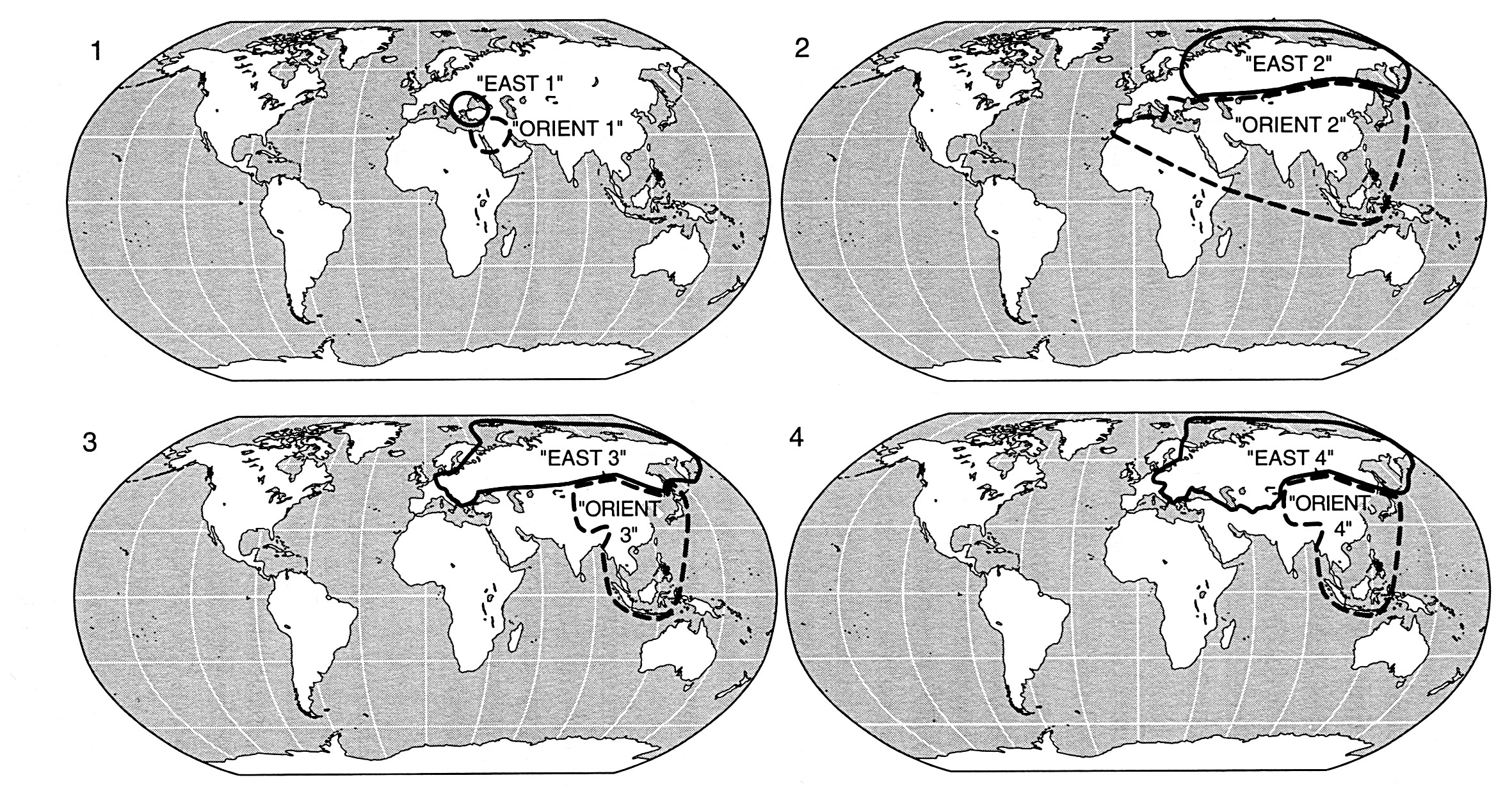
From China geography…
The dominance of “now,” of national territory, maps, facts and figures.
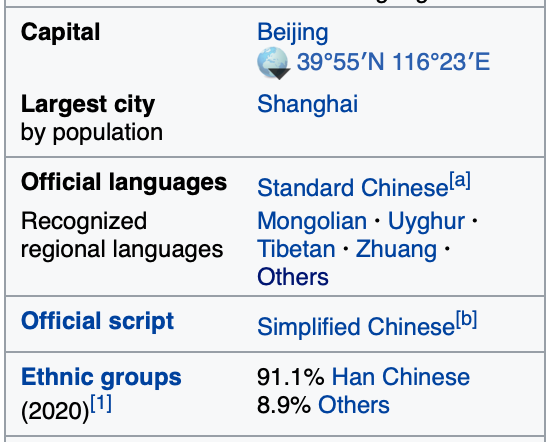
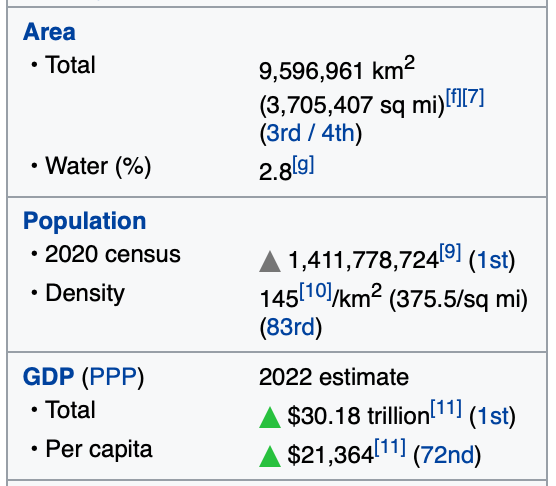
What other senses of China are there beyond this simplified geography?
…to geographies of China
Geography as a discipline
a concern with spatial difference
- description: what is where (and when)
- analysis: why is that there (then)
- history: imperialism, colonialism, racism, and (national) development
- today: critical geographies of capital and power, politics of knowledge, attending to what was erased
- the “spatial” is interdisciplinary
Why “geographies”?
There are many Chinas.
If we can break away from the way national territories dominate geographical thinking, we can attend to many other ways of thinking critically about geography: space, place, region, landscape, ecoregion, borders, networks…the possibilites are many!
Beyond physical geography
- Geography is an interdisciplinary field that encompasses much more than what is often understood as its focus on maps, facts, and physical geography.
- Human geography and environment-society relations are the core focus of this course, though we will be talking about physical geography as well.
Course overview
Please log into Google Classroom, go to the Classwork tab and open the course website.
Google Classroom
A brief look at our LMS: Google Classroom
Syllabus
One-minute syllabus search
Counting off by 12, you will take on the question below that corresponds to your number. You will have one minute to complete the following task:
Navigate to the course home page (the syllabus) by clicking the course title at the upper left of the course website. Tap the f key on your keyboard. This will bring up a search box. Find the answer to your question:
- How will I receive course announcements?
- Where should I ask a question about a specific assignment?
- Where can I find upcoming deadlines for the course?
- Where do I find course materials?
- How do I sign up for office hours?
- What should I prepare for each class?
- How should I participate in class?
- How am I supposed to turn in assignments?
- What is the late assignment policy?
- What to do if I missed, or will miss, a class?
- Are AI tools allowed in this course?
- How is the course grade determined?
Assignments this week
Let’s read these assignment instructions together:
Personal introductions
Take a couple of minutes to interview a classmate, and prepare to introduce them to the class by telling us their:
- name,
- major (or academic interest),
- year in university, and
- favorite place.
Take another couple minutes to be interviewed by your partner, and then take turns reporting back to the class.
Wrap up
For next class
- Read the syllabus
- Read Harrell 2023, Chapter 1
- As you read, build for yourself a mental map of China’s physical geography, keeping the key differences between China Proper, Chinese Zomia, and Chinese Central Asia clear in mind.