4.1 “Ethnic” Place

Zili Village, Kaiping County, Guangdong. Source.
Today
- Introduction to Part 2: Place and Territory
- This week: Discuss the relationship of national and ethnic identity in China with place and territory.
- Discuss the term minzu and two common forms in China: Zhonghua minzu and shaoshu minzu.
- Explore ideas about native place, and discuss the spatial nature of identity and culture.
Reading Response
Introduction to Part 2: Place and Territory
Syllabus overview: learning outcomes, and readings over the next couple of weeks
Ways of Thinking Geographically
- “earth writing” (geo-graphy)
- attending to spatial relationships and spatial difference
- description: what is where (and when)
- analysis: why is that there (then)
- attend to human-environment relations
- culture: recognizing that our individual and collective sense of place matters
- power: the making of territory shapes us in significant ways
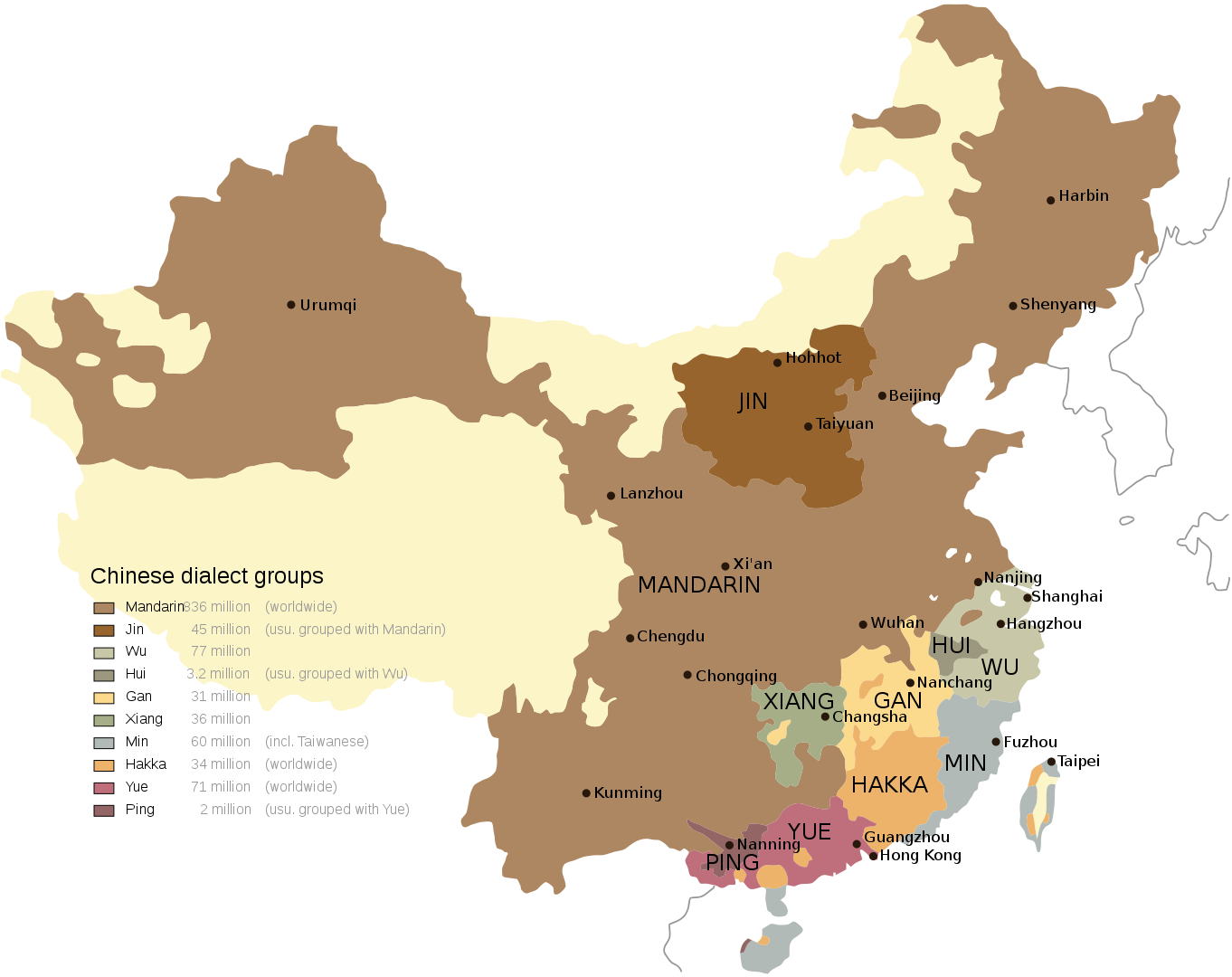
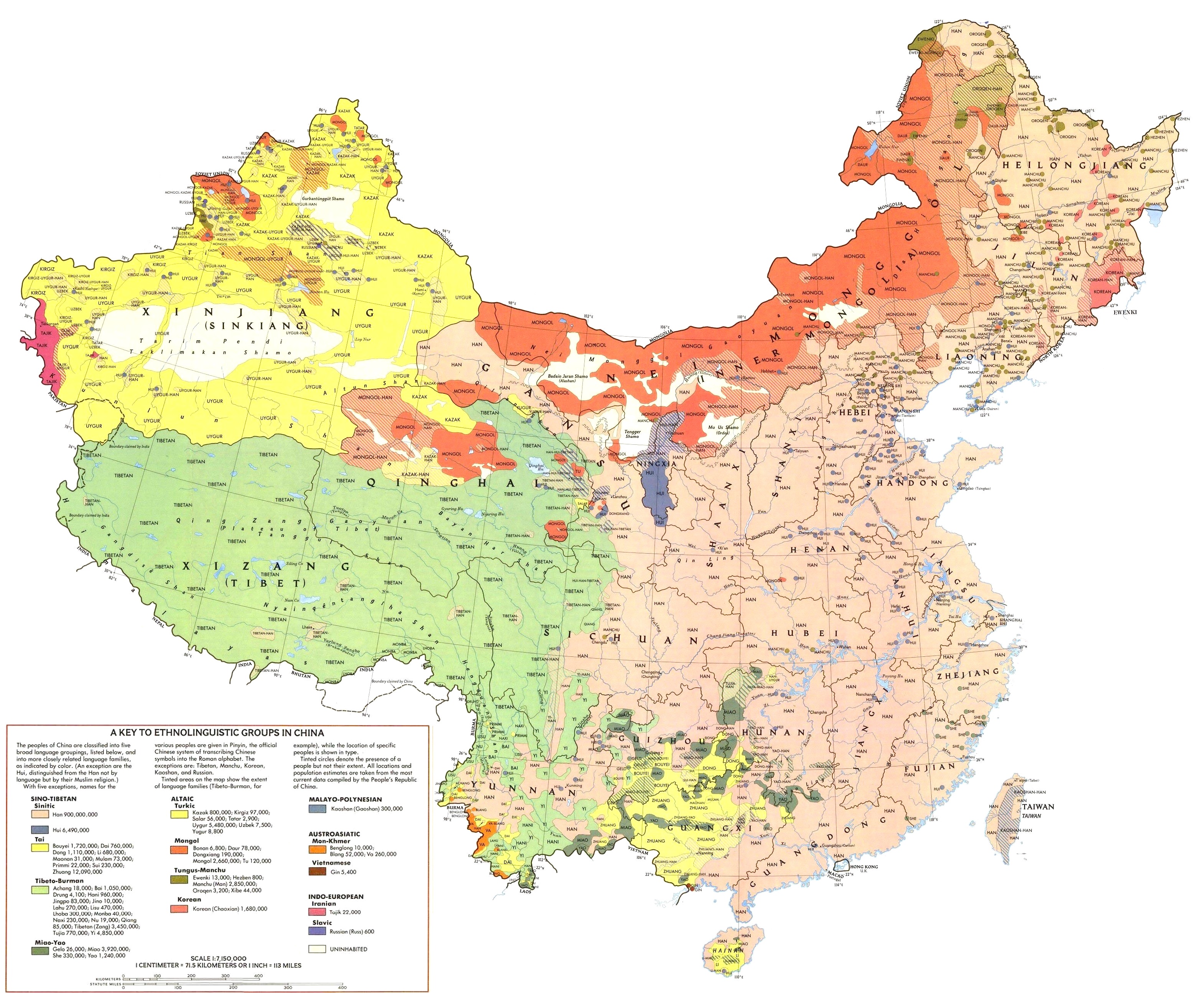
China’s ethnolinguistic diversity
Chinese dialects
Ethnolinguistic groups in China
Minzu
- Minzu 民族
- the two characters ‘min’ and ‘zu’ were not used together in China until the late 19th century
- a subgroup of the Chinese nation (Han, Mongols, Tibetans, etc.)
- different from “ethnicity” in that it is an important state category in China, rather than a self-identifying group with a persistent ethnic identity
- the state creation of official minzu categories was one of the key changes in late 20th century China
- minzu structures both individual identity and social relations; institutionalized in government
Common uses
- Hanzu (Han minzu) 汉族
- the national majority (92%)
- debate in 1950s about when in history the Han minzu was formed
- Shaoshu minzu 少数民族
- ethnic minority (8%)
- Ethnic classification should be understood in the context of the CCP state project and class nation-building: provided the key demographic blueprint for a unified multiethnic country
- Zhonghua minzu 中华民族
- all people who live within China’s territory
- in Republican period, the Chinese people, Han, plus Manchu, Mongol, Hui, and Tibetan: the Nationalists in particular expected ethnic groups to assimilate
- in Mao era through today, the Chinese nation, seen as one people under a unified socioeconomic system: Mao would himself criticize Han ethnocentrism; in both cases, though the state became the defining element in the national question
Differences with nationality/ethnicity
- minzu is a fixed state invention; ethnicity is an identity held by a group (Yang 2009, 744)
- differs from Stalin’s nationality because minzu includes ethnic groups in different “developmental stages,” and that don’t fit Stalin’s four-commons (See Yang (2009).)
- differs from western ethnicity in that it is designated by the state (minzu could indicate a mix of ethnic groups, a single ethnicity, a sub-ethnic unit or a tribal community)
Minzu policies today
- officially, all peoples are considered equal, though in practice there are differences (certain ethnic “benefits,” nominal autonomy, discrimination, securitization)
- the state has extended into ethnic minority to a historically unprecedented degree, for the most part with acceptance
- those that do not accept minzu policies now face the full force of China’s state-building interventions, securitization, and “civilizing” projects
- “second-generation” ethnic policy reexamining the approach taken since the 1950s
Native place
- native place
- a variety of definitions, but broadly a “local” identity
- “father’s place of origin or birth, mother’s place of origin or birth, current place of living, hukou location, birthplace, place where one grew up…” (Joniak-Lüthi 2013, 865)
- “native-place-determined mindset” jiaxiang guannian 家乡观念 (Joniak-Lüthi 2013, 852)
1. What aspects of “Han” identity are “ethnic”?
In your group, review the key terms Joniak-Lüthi employs (minzu, ren, jia, min), and then discuss the question: Are these terms – and related socionyms and stereotypes – “ethnic”? If so, how? Pull out at least one key example from the text (with a page reference).
2. How is Han identity spatial?
Using the synthesis handout, develop your (group) understanding of what Joniak-Lüthi could say about the spatiality of ethnicity in China, that is the relationship of ethnic identity and geography: How does “Han-ness” relate to place, region, and/or nation?
Wrap up
For next class
- Review Yang (2009) with an eye for the relationship between ethnicity, place, and territory.
References
Joniak-Lüthi, Agnieszka. 2013. “The Han Minzu, Fragmented Identities, and Ethnicity.” The Journal of Asian Studies 72 (4): 849–71.
Yang, Bin. 2009. “Central State, Local Governments, Ethnic Groups and the Minzu Identification in Yunnan (1950s – 1980s).” Modern Asian Studies 43 (3): 741–75.