2.2 Discussion
Yellow Earth
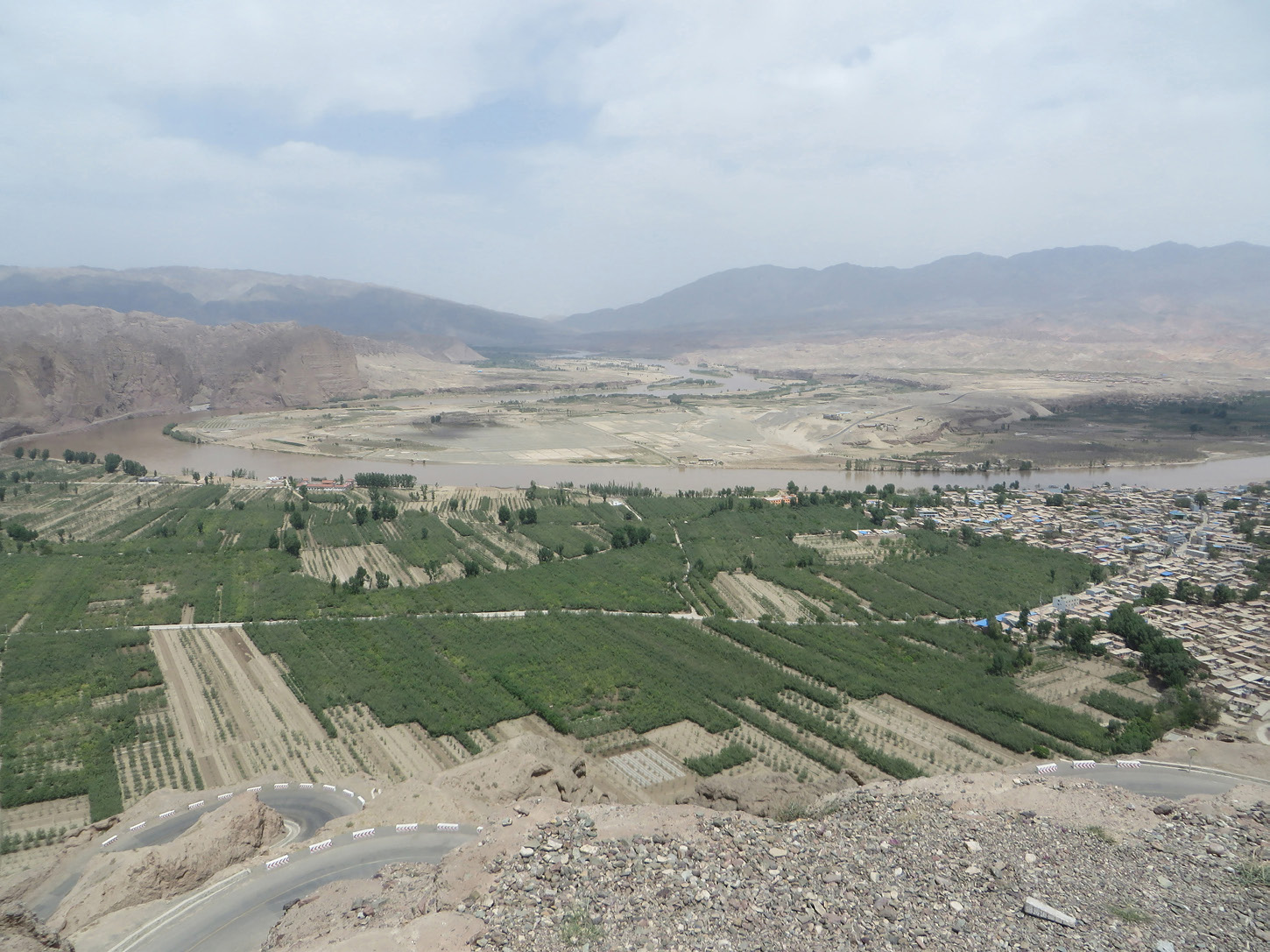
The Yellow River in Jingtai County, Gansu Province (north of Lanzhou). Source: Veeck et al. (2021).
Today
- Discuss Peitz’s concept of a “technology complex.”
- Discuss water management in early imperial China (c.300 BCE–c.300 CE), and the idea of “ordering the waters.”
- Discuss ecological breakdown and the impact of human action in late imperial China (1500–1911).
Reading
Pietz (2015), Introduction,
Chapters 1 and 2
Key concepts
- technology complex (esp. “hybrid”)
- “ordering the waters”
Reading Responses
A few things: question review, underlining, marks and assignment rubric, and some patterns I see.
The Yellow River conceptual framework
Free discussion
Take turns in your group sharing something in the Pietz readings that left an impression on you (as important, or insightful, or otherwise memorable). Once you all share, discuss any connections that come to mind to previous class discussions, our readings, or from something outside of the course.
- technology complex
- “a specific kit of tools employed to achieve a particular goal. These tools include administrative organization, technological form, and cultural imaginary that can be used to legitimize the means and ends of water management projects” (5).
Examples of technology complexes
Let’s split into groups and sketch out the four key examples of a “technology complex” from Pietz. Refer primarily to pages 5 to 9.
| technology complex | characteristics | examples |
|---|---|---|
| 1. traditional/imperial (p54) | ||
| 2. modernist: Europe, North America | ||
| 3. high-modernist: Soviet | ||
| 4. Mao-era hybrid |
Imperial water management (Pietz, Chapter 2)
- video: Dujiangyan 都江堰, c.265 BCE
- video: Grand Canal 大运河, Yuan Dynasty (1271– 1368)
We’ve reviewed the book’s goals (PS/ARG). Let’s do the same for this chapter, and then get into the evidence (EV).
- ordering the waters 治水
- literally water control or management (engineering), but also a political mandate to harmoniously regulate nature (governance)
- Pietz (2015) calls this a “straightjacket” (53), leading to “technological lock-in” (61)
Hydraulic cycle
…new states aggressively “ordered the waters” only to see the new ecological balance deteriorate (8–9)
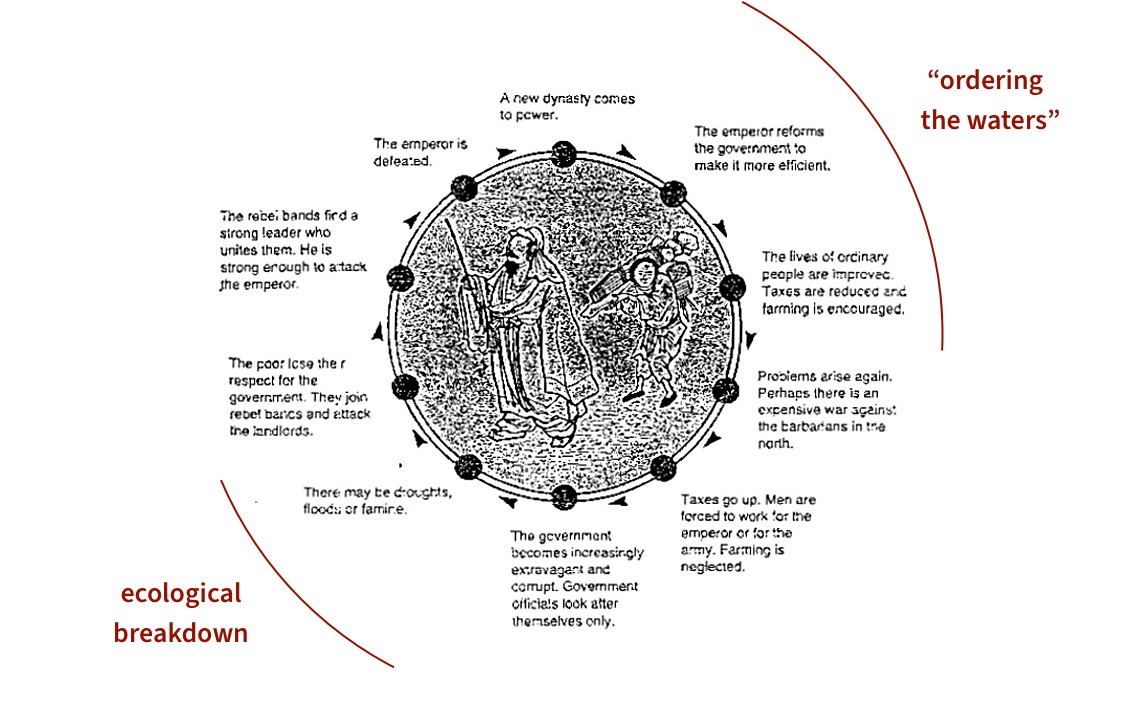
Ecological breakdown
Something begins to change in late imperial China (1500-1911), as ecological problems mount (see Pietz, p54–69). The significant example is the 1855 Yellow River dike break (65–67).
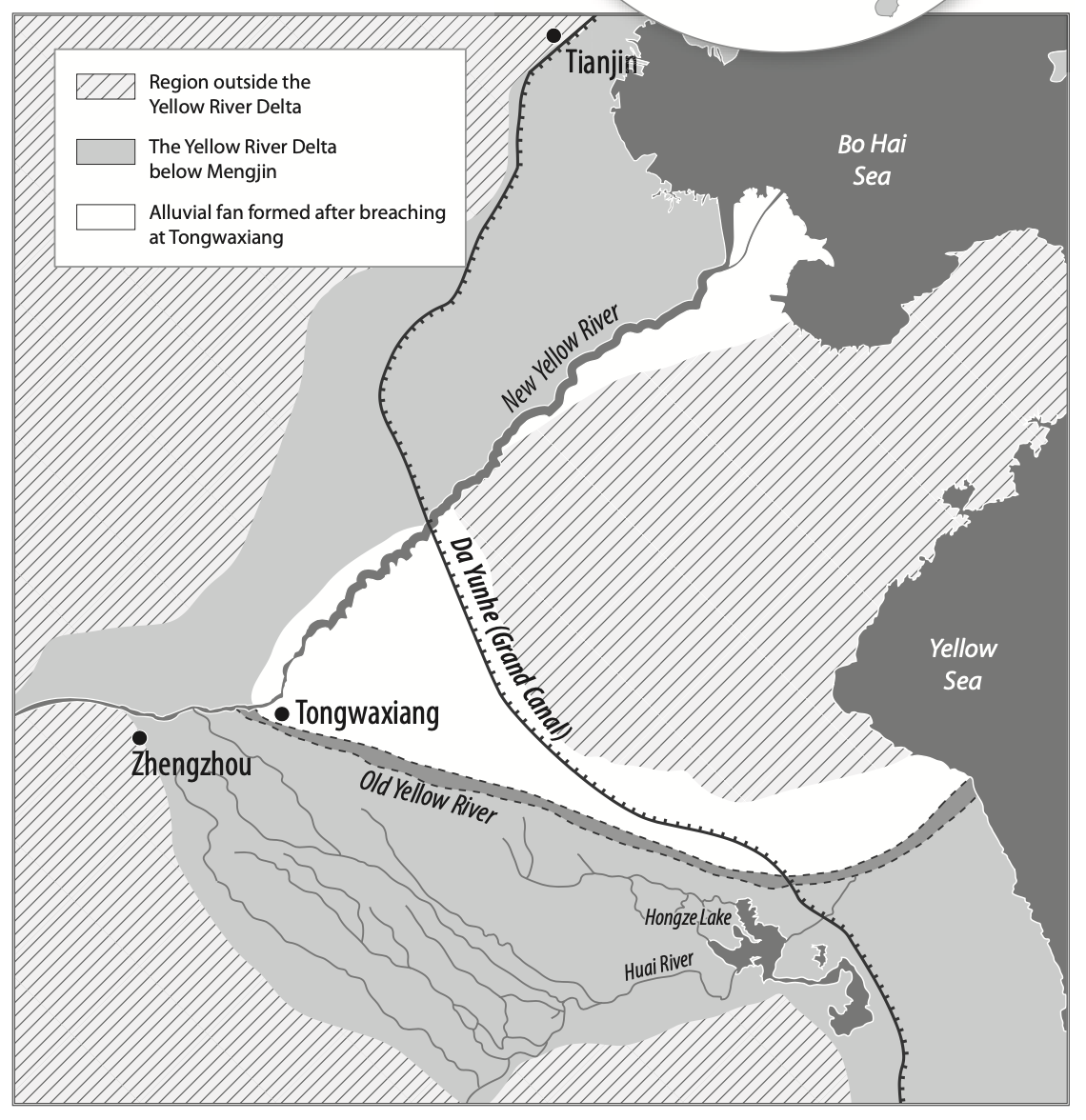
Synthesizing questions
What is the historical relationship between water instability and political instability?
How might we analyze the ecological breakdown that Pietz discusses using Harrell’s ideas about regions and buffers?
Why is the 1855 Yellow River course change an important example to remember?
What is the relationship between technology complexes and technological lock-in?
Wrap up
- You may leave constructive, anonymous feedback. Link added to the syllabus.
- Please reach out if you ever have concerns about the course workload. Especially with regular reading, apply reading strategies rather than trying brute force.
For next class
- Pietz, Chapter 4 on Mao-era water management, and “The Dilemma for State and Party” (in Chapter 6, pages 279–287). This will be very helpful in linking the Yellow River history with cultural and political concerns today.
- Reflect on the ways the Yellow River is a cultural force, as well as an ecological and political challenge.