3.2 Discussion
Yellow Earth, Blue Ocean
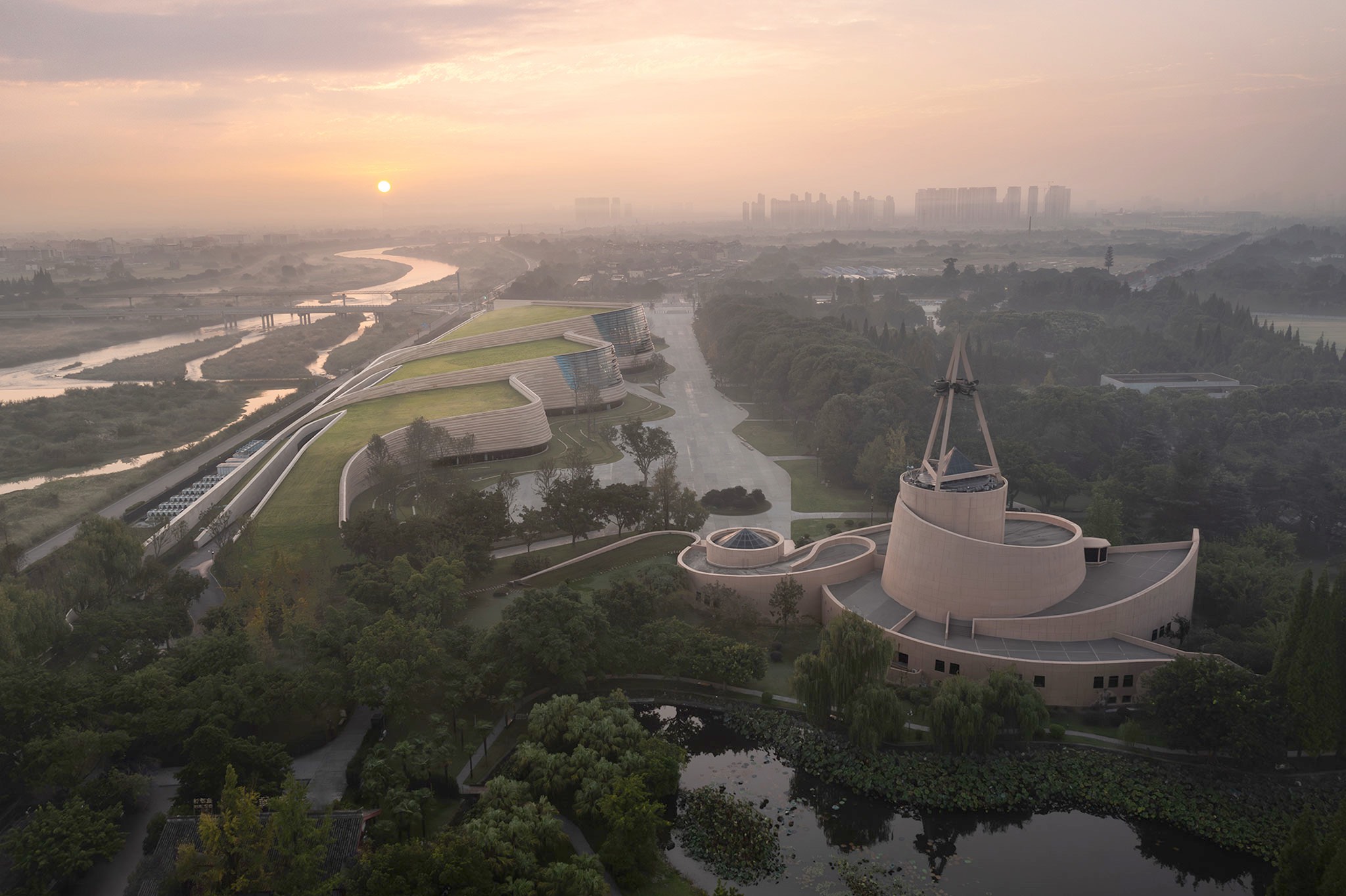
New Sanxingdui Museum, north of Chengdu, Sichuan. Source.
Today
- Discuss the fusion of state-building, nation-building, and infrastructure construction early in the PRC.
- Discuss the various cultural meanings of the Yellow River in the PRC, including the debate around the “root” narrative of Chinese culture.
- Understand the role that archaeology – in the North China Plain and elsewhere – has played in China’s national narratives.
Reading Responses
- Most got close to the ARG, fewer the PS. Extension asked for connecting “technology complexes” to these.
- For readings, be sure you have the big picture clear: How do the problem statement and argument relate?
Cultures of the Yellow River
Review the Yellow River as a cultural idea, along with exerpts from Pietz (2015), Chapter 6 (279–287)
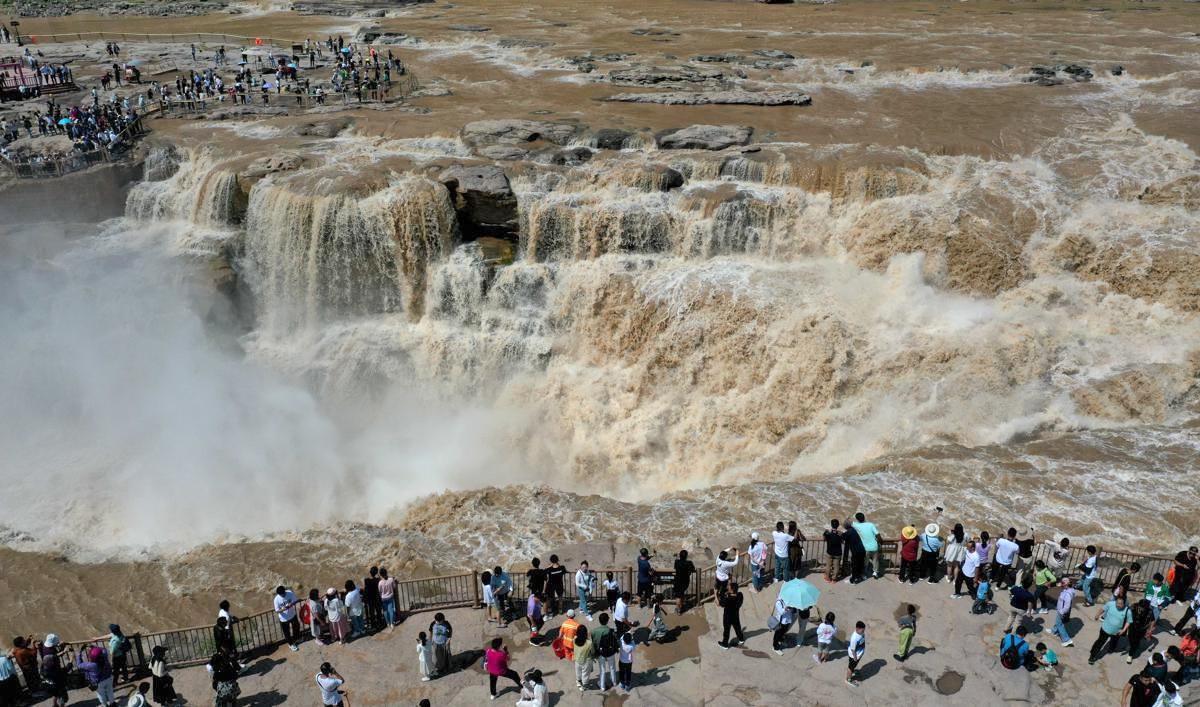
…the landscape of the North China Plain was a canvas upon which to employ symbols and myths to create an idealized landscape of production. (132)
The midcentury transitions that served to reconceptualize the waters of the North China Plain included the construction of a national landscape. The Yellow River as the “mother of Chinese civilization” (Zhonggguo wenhua de muqin) and North China as the “cradle of the Chinese people” (Zhonghua minzu de yaolan) were elements of a national mythos constructed by political and intellectual elites to craft a modern nation from the multiethnic and multicultural empire of the Qing dynasty. This identity between North China and the nation would be challenged in the post- Mao era, but the symbolic value of North China in general, and the Yellow River in particular, continued to fuel a strong national mythos down to the contemporary period. (99–100)
- the myth of Yü the Great
- the Mandate of Heaven and the hydraulic cycle (“ordering the waters” and ecological breakdown)
- geographic metaphors in “River Elegy”
On China’s national landscapes
The North China Plain
The midcentury transitions that served to reconceptualize the waters of the North China Plain included the construction of a national landscape…(Pietz, 99)
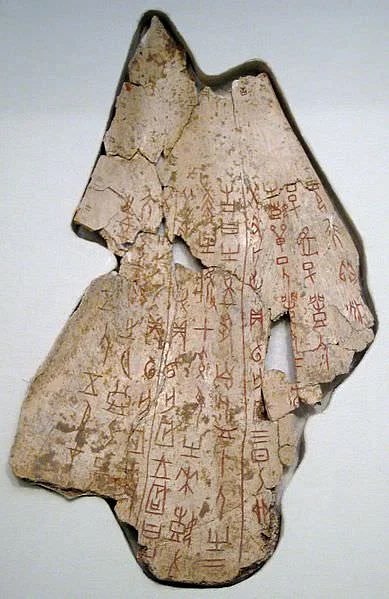
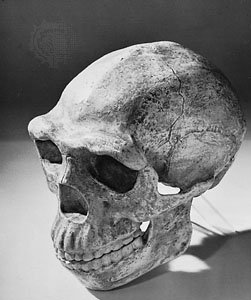
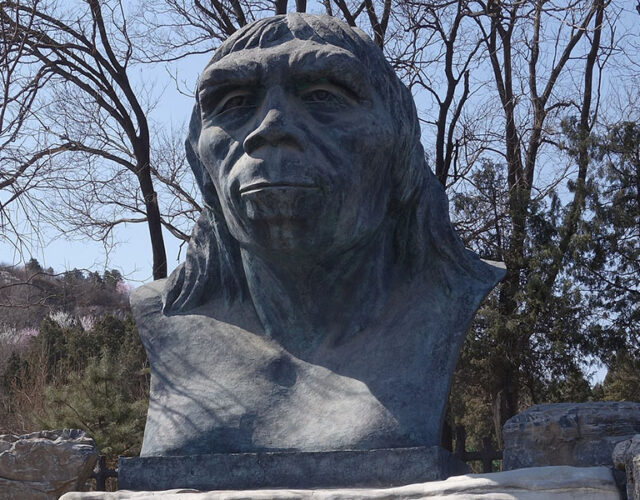
The appearance of Peking Man in 1929 provided the evidence necessary to construct an argument for the origin of the Chinese people…. By identifying North China with the origins of Chinese civilization, and by linking the North China region with the peasantry and agriculture, Chinese Communist leaders added additional moral layers to the mythic landscape of North China that, after 1949, were employed in support of hydraulic transformations. (103–104)
Making sense of the periphery

Can we identify a PS and ARG for Lawler?
Synthesis Reports
- Vera B.
- Sunny S.
Synthesizing Pietz and Lawler
Pietz (Introduction, Chapter 6) discusses how the North China Plain and the Yellow River embody both China’s cultural roots (archaeology, soil) and China’s “sorrow” (uncontrollable nature, feudal history, backward thinking). Using the synthesis handout, map out an answer to the following question:
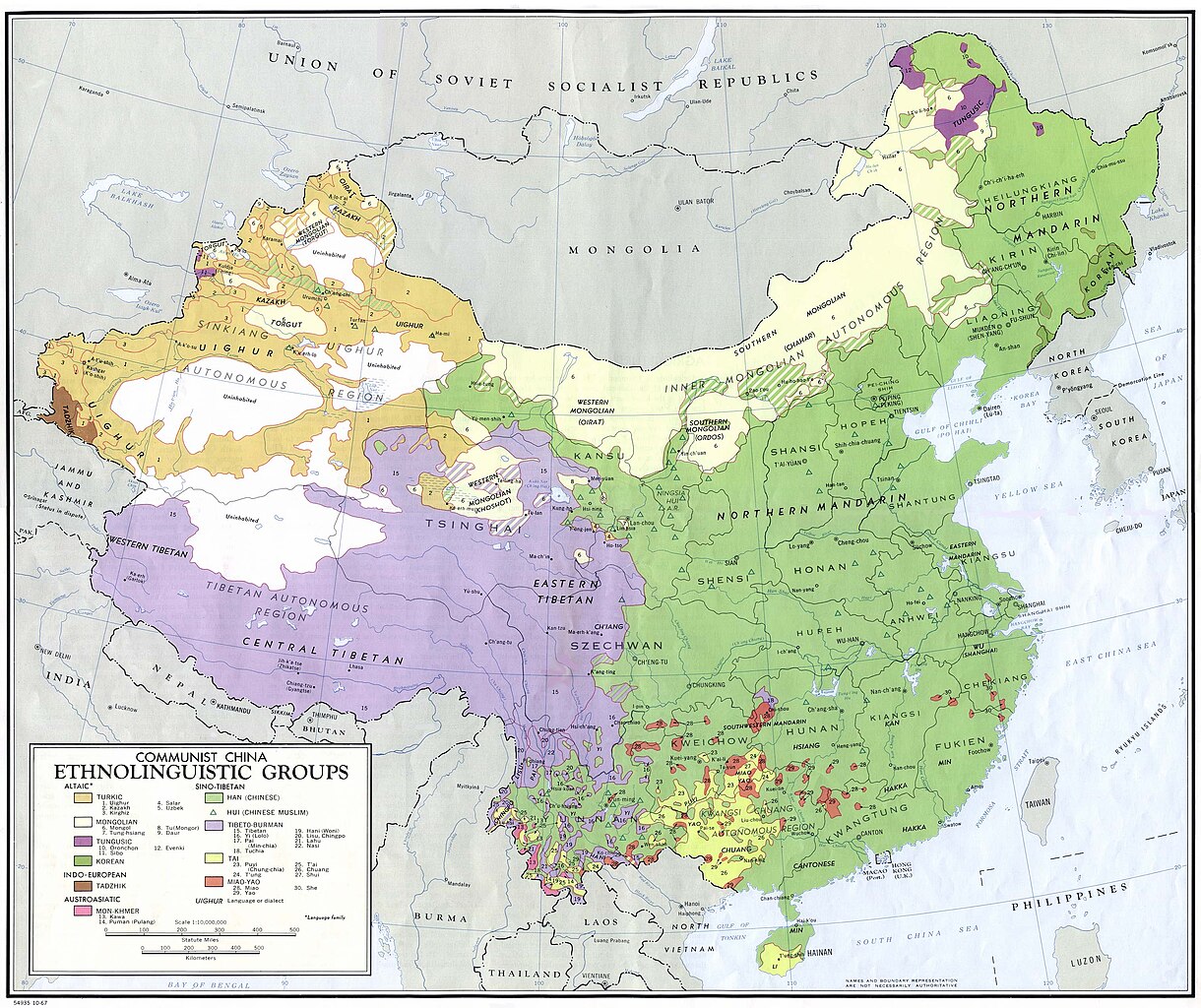
Is there a geographic center for Chinese culture? To what extent can areas peripheral to the North China Plain be considered “Chinese”? In what ways can these peripheral areas, or contact zones, become “national landscapes”?
Pull out key ideas and details from both Pietz and Lawler, and once you have focused on each reading analytically, generate some synthesizing ideas that draw on both of them, but take this discussion in a new direction. Focus mainly on the question above, but note down other ideas that come to mind as well.
How China Became China
How China became China is no mere academic topic; it goes to the very heart of how the world’s most populous and economically vibrant nation sees itself and its role in the world. (Lawler 2009, 931)
- The core-periphery dualism is only one way of thinking about China
- In China’s imperial past, there was no clear marker of inside and out, even if Han Chinese culture was concentrated in one region
- Diverse archaeology has sparked archaeological debate and become a local resource for heritage and tourism, and yet still supports unitary nationalism voiced by Mao Zedong (“Leninist, anti-imperialist, closed to the outside world, focused on north China, on Mandarin, and on the ancient autocratic state of Qin (Friedman 2002)).
Contact zones, borderlands, and frontiers
The concept of a “contact zone” – a meeting point of cultures, of cultural, ethnic, or racial others, often political in the sense of an imperial encounter (Pratt 2008) – offers a way of thinking about core and periphery not in terms of a hierarchy of relations between center and remote areas, but rather as an important space for exchange in itself.
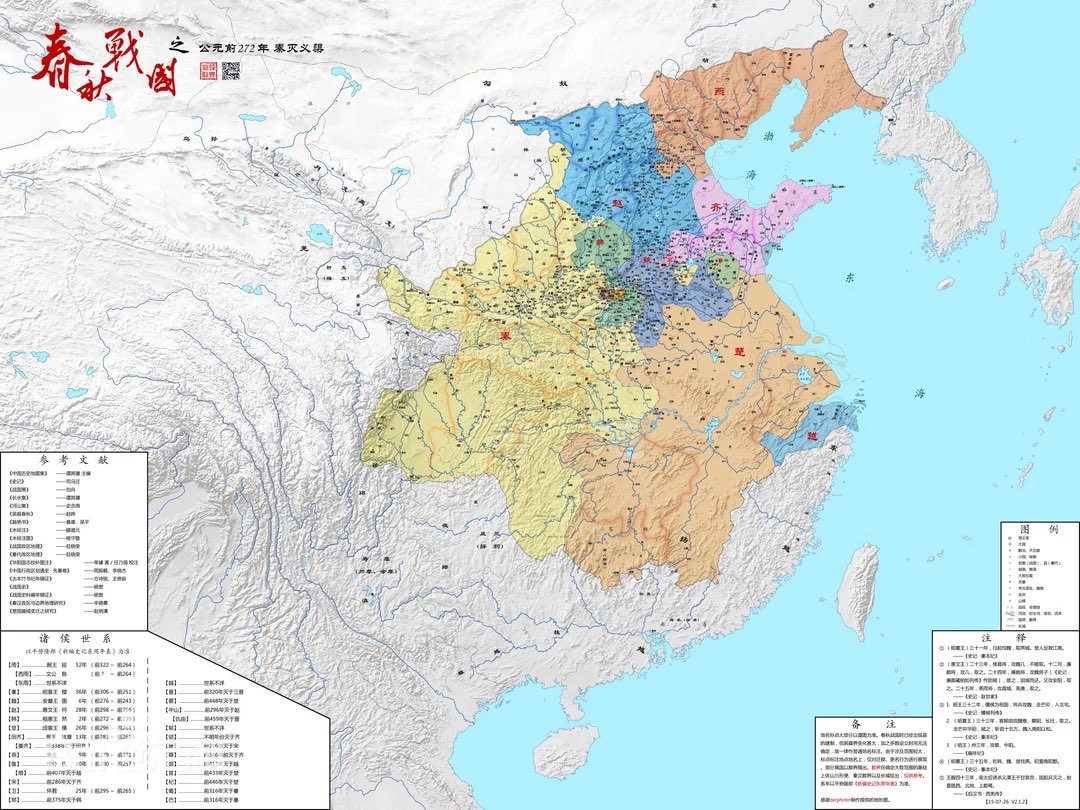
The China’s contact zones can be thought of broadly, using Harrell’s terms, as the areas between cultural China Proper and Chinese Zomia and Central Asia. Though it might also be relevant to the consolidation of “Chinese” cultural and political systems with the rise of the Qin kingdom and its eventual consolidation of China’s first imperial dynasty.

Synthesizing questions
What is the relationship between water management, state-building, and nation-building?
How might we imagine the Yellow River as China’s first national landscape? How much does it represent a national landscape today?
What role has archaeology played in defining and reshaping China’s cultural history?
Wrap up
- “View your work” in Google Classroom to be sure you’re caught up.
- Review China Gazetteer: Topic Idea assignment
- Review AI guidelines
For next class
- Joniak-Lüthi 2013 and Yang 2009